






Kontaktieren Sie uns

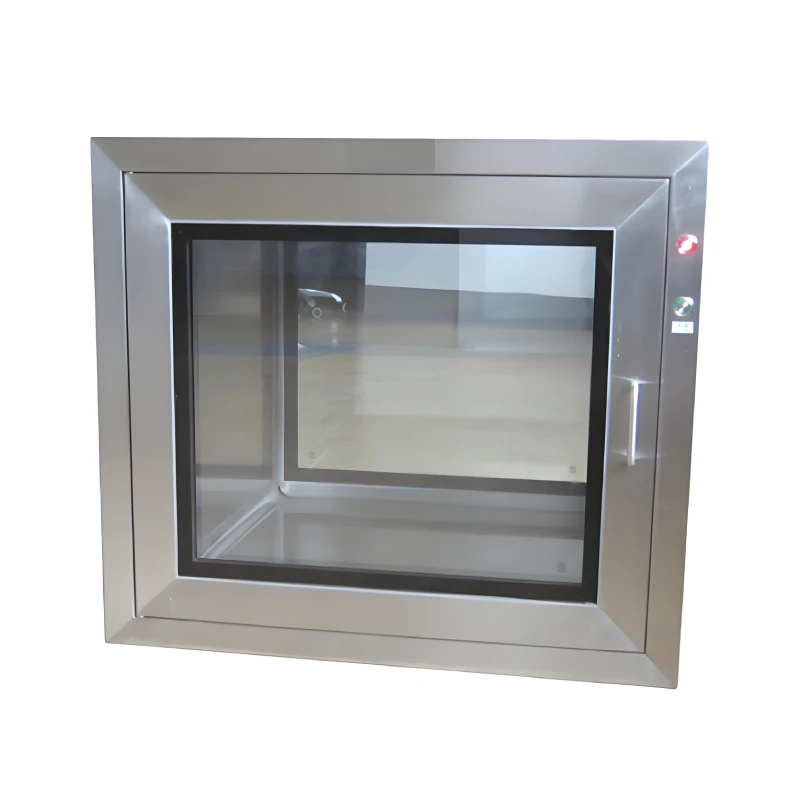
Statische Passbox
Übersicht:
Die Static Pass Box, auch als Static Transfer Window bekannt, ist ein Materialübertragungsgerät, das zwischen sauberen und nicht sauberen Bereichen oder zwischen Zonen mit unterschiedlichen Reinigungsniveaus installiert wird. Im Gegensatz zu dynamischen Passboxen, die Lüfter und Filter enthalten, enthält die Static Pass Box keine betriebenen Geräte und setzt ausschließlich auf physische Isolation und Verriegelungsmechanismen, um einen sicheren Materialtransfer zwischen Bereichen mit unterschiedlichen Reinigungsniveaus zu erreichen. Die Static Pass Box bietet Vorteile wie einfache Struktur, niedrige Kosten, einfache Wartung und geräuschfreien Betrieb. Es ist ein grundlegendes Materialübertragungsgerät für Reinräume und wird in der pharmazeutischen, biologischen Labor-, Elektronikherstellungs- und Lebensmittelverarbeitungsindustrie weit verbreitet.
Schlüsselwörter:
DETAIL:
1. Product Overview
The Static Pass Box, also known as Static Transfer Window, is a material transfer device installed between clean and non-clean areas or between zones of different cleanliness levels. Unlike dynamic pass boxes that incorporate fans and filters, the Static Pass Box contains no powered devices and relies solely on physical isolation and interlocking mechanisms to achieve safe material transfer between areas of different cleanliness levels.
The Static Pass Box offers advantages including simple structure, low cost, easy maintenance, and noise-free operation. It is a fundamental material transfer device for cleanrooms and is widely used in pharmaceutical, biological laboratory, electronics manufacturing, and food processing industries.
2. Working Principle
The working principle of the Static Pass Box is based on two core mechanisms: physical isolation and interlock control.
First, Physical Isolation. The pass box housing physically separates two areas of different cleanliness levels. Both doors remain closed under normal conditions, forming a physical barrier that prevents direct air exchange between the two sides.
Second, Interlock Protection. An interlock device is installed between the two doors. When one door is opened, the opposite door is automatically locked and cannot be opened. This design ensures that only one door can be opened at any given time, effectively preventing cross-contamination through airflow.
Third, Material Transfer Process. The operator on the low-cleanliness side opens the outer door, places the material inside the chamber, and closes the outer door. The interlock then releases the lock on the opposite door. The operator on the high-cleanliness side opens the inner door, removes the material, and closes the inner door, completing one full transfer cycle.
Fourth, Seal Maintenance. When both doors are closed, the sealing device of the pass box ensures airtightness between the housing and doors, maintaining stable pressure differential between the two sides.
3. Product Structure and Components
The Static Pass Box consists of the following core components:
Housing: Manufactured from high-quality stainless steel sheet or cold-rolled steel sheet, with brushed or coated finish. The interior surface is smooth and flat for easy cleaning. The housing structure is robust with good sealing properties.
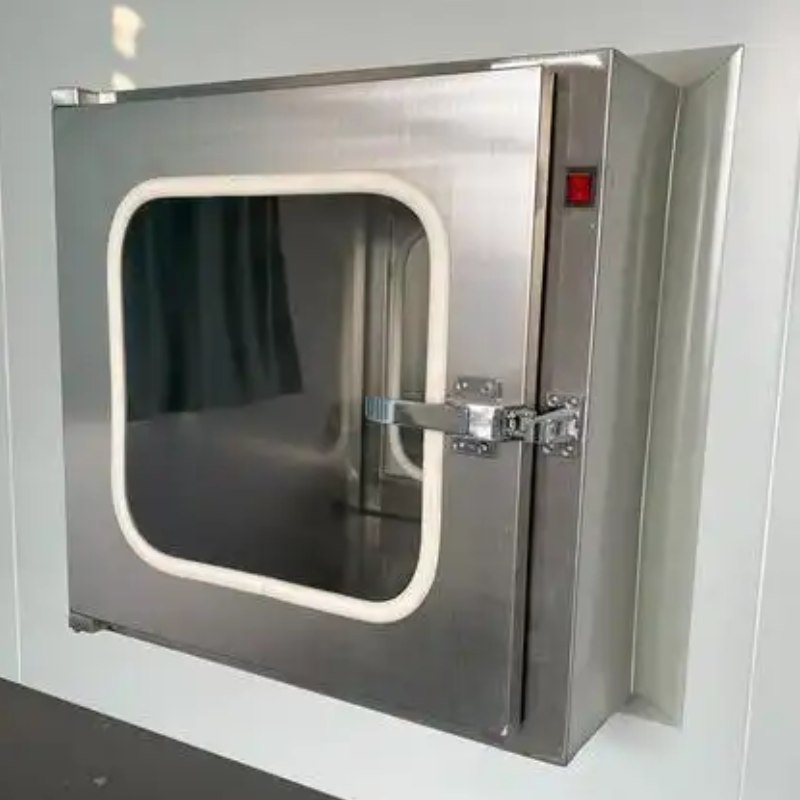
Doors: Typically double-layer tempered glass doors or stainless steel doors with transparent viewing windows for observing the contents. Doors are connected to the housing via hinges for smooth opening and closing.
Interlock Device: Includes mechanical interlock and electronic interlock. Mechanical interlock uses mechanical linkages to achieve door interlocking without power supply. Electronic interlock uses electromagnetic locks and control circuits requiring power supply, offering better reliability and safety.
Sealing Device: High-elasticity sealing gaskets or magnetic sealing strips installed on the door edges to ensure airtightness when doors are closed.
Work Surface: The interior bottom surface is a flat work surface, typically made of stainless steel for wear resistance and easy cleaning. Some models can be equipped with non-powered rollers for transferring heavier items.
Handle: Stainless steel handles installed on doors, meeting cleanroom hygiene requirements and providing easy operation.
Indicator Lights: Electronic interlock models typically feature status indicator lights showing door open/close status and interlock status.
Buzzer: Some models emit an audible alarm when a door remains open for an extended period, reminding operators to close the door.
Control Panel: Electronic interlock models are equipped with a simple control panel for controlling interlock logic and alarm settings.
4. Features and Advantages
First, Simple Structure. The Static Pass Box contains no complex components such as fans or filters. The structure is simple and reliable with low failure rate.
Second, Cost Effective. With no power or filtration systems, the manufacturing and maintenance costs of Static Pass Boxes are significantly lower than dynamic pass boxes, making them suitable for budget-constrained projects.
Third, Noise-Free Operation. The Static Pass Box has no moving mechanical parts during operation, resulting in completely silent operation, suitable for noise-sensitive laboratories and medical facilities.
Fourth, Easy Maintenance. Daily maintenance is limited to cleaning interior and exterior surfaces and inspecting sealing gaskets. No filter replacement or fan maintenance is required, resulting in low maintenance workload.
Fifth, Flexible Installation. Static Pass Boxes are lightweight and compact, making installation easy. They can be installed on various wall types including sandwich panel walls, brick walls, and drywall.
Sixth, Energy Efficient. Static Pass Boxes require no power except for the electronic interlock (which consumes minimal electricity). This meets energy efficiency requirements.
Seventh, Safe and Reliable. The interlock device ensures both doors cannot be opened simultaneously, effectively preventing cross-contamination. Electronic interlock models also feature power-off protection where all doors automatically lock when power is lost.
Eighth, Highly Customizable. Dimensions, materials, interlock type, door style, and other features can be customized according to customer requirements to suit different application scenarios.
5. Technical Specifications (Standard)
Housing Material: 304 stainless steel or 316L stainless steel, or cold-rolled steel sheet with powder coating
Door Material: Stainless steel door or double-layer tempered glass door (with viewing window)
Window Glass Thickness: 4 to 5 millimeters tempered glass
Interlock Type: Mechanical interlock or electronic interlock
Power Supply: Mechanical interlock requires no power; electronic interlock requires AC220V 50Hz
Standard Dimensions (Width × Depth × Height): Common sizes include 400×400×400mm, 500×500×500mm, 600×600×600mm, 600×600×800mm, 800×800×800mm, and non-standard custom sizes available
Work Surface: Stainless steel flat plate or non-powered rollers
Sealing Gasket: Silicone sealing gasket or EPDM sealing gasket
Surface Finish: Brushed finish or mirror polished
Operating Temperature: 0 to 40 degrees Celsius
Operating Humidity: Less than 95% relative humidity
Installation Method: Wall recessed installation
6. Product Classification
By Interlock Type: Mechanical Interlock Static Pass Box uses purely mechanical structure for interlocking, requires no power, suitable for locations without power supply or sensitive to electromagnetic interference. Electronic Interlock Static Pass Box uses electromagnetic locks and controllers for interlocking, offers fast response, high reliability, and alarm functions, suitable for GMP-compliant applications.
By Door Type: Stainless Steel Door Static Pass Box features all-stainless steel door structure, robust and durable, suitable for high-frequency use. Glass Door Static Pass Box features double-layer tempered glass door structure, high transparency for easy viewing of contents, suitable for applications requiring real-time visibility.
By Material: All-Stainless Steel Static Pass Box made entirely of 304 or 316L stainless steel, highly corrosion-resistant, suitable for pharmaceutical and biological laboratories. Carbon Steel Powder Coated Static Pass Box housing made of cold-rolled steel with powder coating, lower cost, suitable for general industrial environments.
By Installation Method: Standard Recessed Static Pass Box installed flush into the wall, level with the wall surface. Wall-Mounted Static Pass Box fixed to the wall surface via flange, suitable for thin walls or locations where large openings cannot be made.
By Application: Standard Static Pass Box provides basic transfer and interlock functions only. UV Static Pass Box features built-in UV sterilization lamp for initial surface disinfection of items. Clean Static Pass Box features specially treated interior with smooth, dead-corner-free surfaces, suitable for higher cleanliness requirements.
7. Application Areas
Static Pass Boxes are widely used in various locations with certain cleanliness requirements but without the need for complex purification functions.
Pharmaceutical Industry: Used for material transfer in non-sterile drug production workshops, API production workshops, packaging workshops, and between warehouses and production areas. Static Pass Boxes are suitable for material transfer between Grade C and Grade D clean areas and between clean and non-clean areas.
Biological Laboratories: Used for sample and reagent transfer in general biological laboratories, microbiology laboratories, and molecular biology laboratories. Static Pass Boxes can be used with UV sterilization lamps for initial surface disinfection.
Electronics Manufacturing: Used for material transfer in electronic component assembly workshops, PCB production workshops, and precision instrument assembly workshops. Static Pass Boxes prevent dust and particles from migrating between different areas.
Hospitals and Medical Facilities: Used for item transfer in general wards, outpatient treatment rooms, central sterile supply departments, and for medication transfer between pharmacies and nurse stations.
Food Processing: Used for material transfer between food packaging workshops, raw material preparation areas, and finished product warehouses, preventing pests and dust from entering production areas.
Cosmetics Production: Used for material transfer between cosmetics filling workshops, packaging workshops, and warehouses, maintaining sanitary conditions in production areas.
Printing and Packaging: Used for material transfer in printing workshops and laminating workshops with certain cleanliness requirements.
General Industry: Used for material transfer between general workshops and warehouses in electronics, machinery, chemical, and other industries, reducing dust and foreign matter entering production areas.
Research Institutions: Used for sample, reagent, and tool transfer in various research laboratories, reducing the impact of personnel entry and exit on experimental environments.
Data Centers: Used for equipment transfer between server rooms and maintenance corridors, reducing the impact of personnel entry and exit on the data center environment.
8. Comparison with Other Pass Boxes
Static Pass Box vs. Dynamic Pass Box: Static Pass Box has no fan or filter, relying on physical isolation and interlock for transfer. Dynamic Pass Box has built-in fan and filter with self-cleaning capability. Static Pass Box offers low cost, no noise, and maintenance-free operation. Dynamic Pass Box has higher cost, some noise, and requires regular filter replacement and fan maintenance. Static Pass Box is suitable for lower cleanliness requirements or items not sensitive to contamination. Dynamic Pass Box is suitable for aseptic transfer between high-grade clean areas.
Static Pass Box vs. VHP Pass Box: VHP Pass Box features vaporized hydrogen peroxide sterilization capability, achieving Log6 kill rate. Static Pass Box has no sterilization capability. VHP Pass Box is suitable for aseptic transfer with high cost and long cycle time. Static Pass Box is suitable for general clean item transfer with low cost and fast transfer speed.
Static Pass Box vs. UV Pass Box: UV Pass Box adds a UV sterilization lamp to the Static Pass Box design, providing surface disinfection of items. Static Pass Box relies solely on physical isolation. UV Pass Box is suitable for applications requiring initial disinfection of item surfaces. Static Pass Box is suitable for applications with no disinfection requirement or where items are pre-disinfected.
9. Selection Guide
Cleanliness Level Requirement: Select the appropriate product based on the cleanliness level difference between the two sides of the pass box. For small differences with no sterility requirement, Static Pass Box is suitable. For large differences or sterility requirements, Dynamic Pass Box or VHP Pass Box should be selected.
Item Characteristics: Determine the internal dimensions based on the size of items to be transferred. Consider the maximum length, width, and height of items, allowing appropriate clearance. For heavy items, consider selecting non-powered rollers.
Frequency of Use: For high-frequency use, electronic interlock type is recommended for fast response and high reliability. For low-frequency use, mechanical interlock type can be selected, requiring no power and offering lower cost.
Installation Environment: Confirm wall type and thickness, and select recessed or wall-mounted installation. For sandwich panel walls, standard recessed installation is suitable. For brick or concrete walls, installation openings must be prepared.
Material Requirements: For pharmaceutical and biological laboratories, all-304 or 316L stainless steel is recommended. For general industrial environments, carbon steel with powder coating is suitable.
Budget Constraints: When budget is limited and cleanliness requirements are moderate, Static Pass Box is an economical and reasonable choice. Electronic interlock type is more expensive than mechanical interlock type. Stainless steel material is more expensive than carbon steel material.
Compliance Requirements: The pharmaceutical industry should select pass boxes that comply with GMP requirements, typically requiring material certificates and factory inspection reports.
Door Type: Choose glass door when real-time viewing of contents is needed. Choose stainless steel door when high durability is required.
10. Installation and Maintenance
Installation Key Points: Cut an opening in the wall according to the external dimensions of the pass box. Insert the pass box housing into the wall opening, ensuring it is level. Fill gaps between the housing and wall with sealing compound or sealing gaskets to ensure sealing. Secure the pass box to the wall using mounting screws or fixing flanges. For electronic interlock type, connect power supply and ground. Install the doors and adjust hinges for smooth opening and closing. Test interlock functionality.
Daily Maintenance: Clean interior and exterior surfaces and viewing windows daily using lint-free cloth and appropriate cleaning agents. Regularly inspect sealing gaskets for aging, damage, or deformation; replace if damaged. Regularly check door hinges for looseness and tighten screws. For mechanical interlock type, regularly check interlock mechanism for smooth operation and apply lubricant if necessary. For electronic interlock type, regularly check indicator lights and buzzer for proper operation; test power-off protection function. Check doors for smooth opening and closing; adjust if sticking occurs.
Filter Replacement: Static Pass Box has no filter, so no filter maintenance is required.
Common Troubleshooting: If interlock fails, check whether the mechanical interlock linkage is stuck or whether the electronic interlock electromagnetic lock and controller are functioning properly. If doors do not close properly, check whether sealing gaskets are deformed or hinges are loose. If electronic interlock type has no power, check power connection and fuse. If indicator lights do not illuminate, check whether bulbs or LEDs are damaged. If buzzer alarms continuously, check whether doors are fully closed or whether the alarm delay setting is appropriate.
Häufig gestellte Fragen
- 1 Wie verbessern elektronische Interlocks den Betrieb?
- 2 Welche Installationsmethode ist am besten für sterile Anwendungen?
- 3 Welche Wartung der Dichtungsdichtung ist erforderlich?
- 4 Was ist das richtige Desinfektionsverfahren für Materialien?
- 5 Ist die Oberflächenabnahme für Durchgangskammern erforderlich?
- 6 Wie sollten Durchgangskammern für Sauberkeit eingestuft werden?
- 7 Wie funktioniert das Türverschlusssystem?
- 8 Was ist der Hauptzweck einer Durchgangskammer?
1
Wie verbessern elektronische Interlocks den Betrieb?
Elektronische Interlocks sorgen für audiovisuelle Warnungen, wenn Türen offen gelassen werden, verhindern versehentliche Schäden durch Zwangsöffnen, ermöglichen die Integration von BMS und unterstützen die Zugangskontrolle mit Benutzerdatenprotokollierung.
2
Welche Installationsmethode ist am besten für sterile Anwendungen?
Verwenden Sie eine vollständig geschweißte Konstruktion aus Edelstahl mit kontinuierlichen Nahtschweißungen und glatten Radiuswinkeln. Dies beseitigt schwer zu reinigende Risse und Spalte, bei denen sich Schadstoffe ansammeln können.
3
Welche Wartung der Dichtungsdichtung ist erforderlich?
Prüfen Sie EPDM- oder Silikondichtungen auf 250% Kompression, wenn die Tür geschlossen ist. Ersatz, wenn gehärtet, gerissen oder Verlust der Elastizität. Reinigen mit 70% Alkohol; vermeiden Sie Chlor oder starke Säurereiniger, die Korrosion verursachen.
4
Was ist das richtige Desinfektionsverfahren für Materialien?
Folgen Sie "zuerst reinigen, dann desinfizieren" - entfernen Sie die äußere Verpackung, wischen Sie sie mit 70% Isopropylalkohol oder 0,5% Peressigsäure ab, legen Sie sie im Abstand zwischen den Gegenständen und stellen Sie sie mindestens 15 Minuten lang UV-Exposition aus (30 Minuten empfohlen).
5
Ist die Oberflächenabnahme für Durchgangskammern erforderlich?
Ja. USP 797 erfordert die Oberflächenabnahme aller klassifizierten Bereiche einschließlich Durchgangskammern. CSPs der Kategorie 1/2 erfordern eine monatliche Probenahme; Kategorie 3 erfordert wöchentliche Probenahme und Charge-End-Probenahme.
6
Wie sollten Durchgangskammern für Sauberkeit eingestuft werden?
Zuweisen Sie der ISO-Klassifizierung des sauberen angeschlossenen Raumes. Wenn beispielsweise ein Durchgang ISO 8 mit ISO 7 verbindet, klassifizieren Sie ihn als ISO 7. Best Practice der Branche folgt dem höheren Standard der beiden verbundenen Bereiche.
7
Wie funktioniert das Türverschlusssystem?
Die Interlock (mechanisch oder elektronisch) ermöglicht es nur eine Tür zu öffnen. Wenn sich eine Tür öffnet, schließt sich die gegenüberliegende Tür automatisch ab, wodurch eine Luftsperre entsteht, die Kreuzkontamination verhindert und Raumdruckdifferenzen aufrechterhaltet.
8
Was ist der Hauptzweck einer Durchgangskammer?
Eine Durchgangskammer ist ein Gehäuse, das in einer Reinraumwand installiert ist, um den Materialtransfer zwischen Bereichen zu erleichtern und gleichzeitig das Kontaminationsrisiko zu minimieren. Es reduziert den Fußverkehr, hält den Differenzdruck und verhindert den ungefiltrierten Luftaustausch durch verschlossene Türen.